
 |
| |
 |
| |
 |
| |
 |
| |
 |
| |
 |
| |
 |
| |
 |
| |
 |
| |
 |

Termite shelter tubing building
up the stem wall of a garage.
up the stem wall of a garage.

Termite tubing on side of a tub

Same tubing up the side of a tub.

A dryer venting into a crawlspace
(besides being a fire hazard), can
create a moist environment in the
crawlspace, which can attract
termites, or foster fungal growth.
(besides being a fire hazard), can
create a moist environment in the
crawlspace, which can attract
termites, or foster fungal growth.
All Rights Reserved Copyright©2004-2021 Perry’s Termite Service
 | |  | |  | |  | |  | |  | |  | |  |
Subterranean Termites
Perry's Termite Service & Repair



(505) 503-8339


| Welcome to the Subterranean termite page of our site. To see photos of some of our repair work, click on "Repair Photos" page |
| Termites in underground duct system (Sonoduct) found mainly in the Southwest: |
Service to: Albuquerque, Rio Rancho,
Corrales, Placitas, East Mountains,
Los Lunas
Corrales, Placitas, East Mountains,
Los Lunas
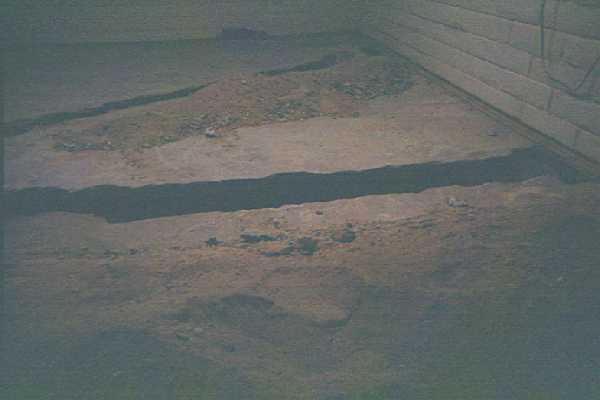
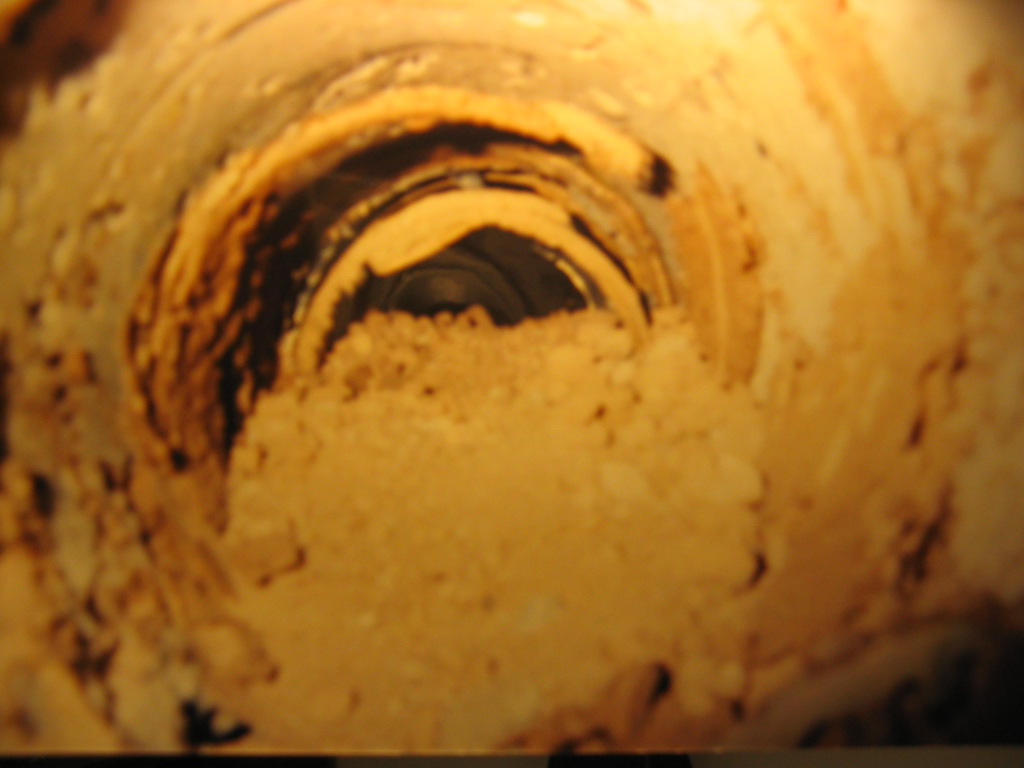
(4 pictures above): A slab home with an in-floor heat register system that had termite damage to the underground
ductwork (cardboard-type material often referred to as Sonoduct). Middle pictures show the removal of the
sonotubes. This system was replaced with metal ductwork. The last picture shows a transition from metal to sonotube.
The owner of the property initially called us after seeing live termites flying out of her floor heat registers. A duct
camera inspection revealed subterranean termites eating the ductwork and it also revealed a collapsed duct channel.
ductwork (cardboard-type material often referred to as Sonoduct). Middle pictures show the removal of the
sonotubes. This system was replaced with metal ductwork. The last picture shows a transition from metal to sonotube.
The owner of the property initially called us after seeing live termites flying out of her floor heat registers. A duct
camera inspection revealed subterranean termites eating the ductwork and it also revealed a collapsed duct channel.
First things first. If you are seeing tiny light brown pellets sifting from a wall, overhead wooden member or
gathering in small piles around windows or doors, you are not dealing with subterranean termites, but instead may
be experiencing an occurrence of drywood termites. If so, please refer to the drywood termite page of this site. Here
in New Mexico, the subterranean termite is the most destructive termite you'll encounter (possibly due to the sheer
numbers that make up an average colony). Unlike Drywood termites (which can have upwards of a few thousand
members per colony), the Subterranean termite colony can number more than a million members.
Moisture sources for termites in your home- Subterranean termites require moisture to survive or thrive in an
environment. For this reason, infestations are normally found when remodeling a bathroom or kitchen area. In a
kitchen or bathroom, termites gain entrance into the structure from one of several locations; tub-trap cut-out in the
slab, up copper water lines (due in-part to condensation), drain lines, or beneath the tub or shower pan. Other
entry points for subterranean termites are the seams from floating or supported concrete slab constructed
structures, behind exterior siding, foam-board or stucco, up through settling cracks, plumbing protrusion lines or
expansion cracks in garages. If the structure is a crawlspace, then you may find the termites building free-standing
tubes from the ground to the floor joists above or constructing tubing up the foundation walls and/or pier post
supports and into the joists or bottom sill plates.
Ground contact is a must for this termite- Subterranean termites must maintain contact with the soil (for water
replenishing purposes) unless the structure that they are feeding upon has a plumbing leak, or some other source
of moisture (above ground). Interestingly enough, the very soil that termites travel through (and must stay in contact
with), also contains bacteria that, if not removed, will kill the termite. As a result, the subterranean termite worker
caste is constantly grooming itself and performs the grooming duties to the other members of the colony.
Termite mud-tubing- Unlike Drywood termites, the Subterranean termite will construct a mud-like shelter tube
made of fecal material and a glue-like substance that binds the tubing together through which they can
accomplish all of their activities. There are no pellets present with Subterranean termites and the mud-like tubing is
divided-up into three types; exploratory tubing, drop tubing and working tubing. Exploratory tubing is also known as
migratory tubing and can often be found in the crawlspace beneath a home on the surface of the ground.
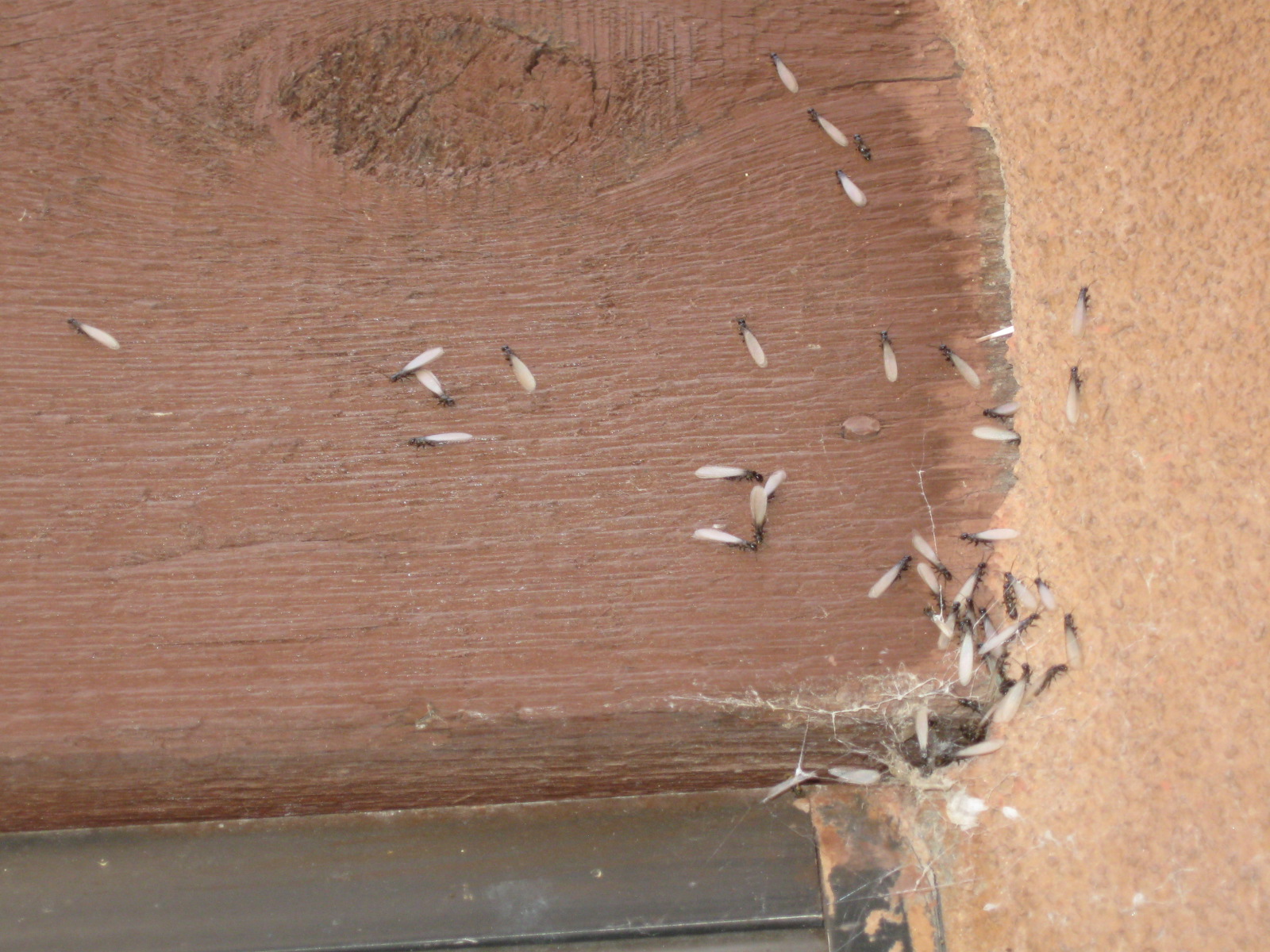
Flying termites- Subterranean termite swarmer's (reproductives) are dark brown to black with grayish colored
wings and are much smaller than Drywood termites. Swarming termites are approximately 1/4 inch in length. Note:
one of the differences between "flying termites" and "flying ants" is in the length and type of wings. Termite wings
will be much larger than the body. Ants wings are almost at equal length with the body. Ants and termites each have
two pair of wings, however, the wings of the termite are of equal length and the ants wings are not of equal length.
Swarming termites are often seen on sunny days in the spring (particularly after a rain) but can also be seen in the
fall. Termite swarming season (in New Mexico) starts late February.
Treatment for Subterranean termites is entirely different than that of Drywood termites. Treatment for
subterranean termites can involve either establishing a repellent barrier around the structure (in the soil) or
installing a subterranean termite bait/monitor system in the ground around the structure. The barrier method is
known as a "conventional" treatment. One of the two termite products that we use is PREMISE; the other is
TERMIDOR. Unlike a true repellent barrier, PREMISE forms what is known as a non-repellent treated zone. Why is
that important? When a repellent pesticide is applied to the soil beneath the structure, the applicator has no way of
knowing if the pesticide is spreading to the intended area(s). Any imperfections (in application beneath the
structure) can allow for termite entry; because the termites will simply go around the repellent pesticide and find an
area that was not treated. With a non-repellent treated zone, you can have the same application imperfections, but
have entirely different results. Termites pass right through the treated area (of the non-repellent PREMISE) never
knowing that they have travelled through it, come in contact with the product and pass it on to other colony
members; thereby effecting the overall results of the application.
Termite bait systems are designed to draw termites into the bait stations by initially placing a piece of wood
(usually pine) into the station and allowing the termites to feed upon the wood; thereby gaining their confidence.
After a period of time, the piece of wood is replaced with the actual bait (stomach poison) and the hope is that the
termites will continue to feed upon the bait and eventually effect the results of the termite colony and the termite
pressure at that particular structure. Some companies will go so far as to claim termite colony elimination; although
that may be an assumption based upon the lack of continued activity. Colony 'suppression' might be a better word.
Localized treatments (with a pesticide solution) will also need to be applied to areas of active infestation inside the
structure; in conjunction with the bait system. Bait systems alone (in our opinion) will not solve the termite problem.
One of the reasons why we believe a bait system alone will not solve a termite problem is that termite workers and
soldiers are blind and cannot see the bait/monitor stations. Termites (through random foraging) will encounter the
bait/monitor stations. And, it is because of a termites random foraging behavior, that you will normally see anywhere
from 15-40 bait/monitor stations installed (for the average 1500 square foot home) around the perimeter of a home
(at approximately 5-10 foot intervals). We witnessed an interesting occurrence (a while back in Los Alamos) at a
home that we were inspecting for a real estate transaction. The homeowner had a different company install a bait
system around the perimeter of his home to control subterranean termites. When it came time to sell his home, the
buyers agent (wanting a second impartial inspection) hired our company to perform the termite inspection. Upon
inspection, we discovered live termites and termite damage to the sill plates in the basement. Ironically, the live
termites and damage were found approximately 3 feet away from a wall-mounted bait station that was installed in
addition to the exterior ground stations. Outraged that he still had live termites and damage (after paying a few
thousand dollars for the termite bait system), the homeowner and his real estate agent asked us if the other
company had done anything wrong with the bait system installation. It appeared that the company had performed
the installation correctly. We also explained that it was due to the very nature of termites (and their random foraging
behavior) that this incident occurred. If you are considering a termite bait system installation, we recommend a
localized treatment(s) to areas of known or suspected activity along with treatment to critical areas (plumbing lines).
Accompanying any termite baiting program should be a periodic visual inspection of the property (which is probably
the most important factor in the success of the program). Periodic inspections should be performed at a minimum of
once a year or sooner (and as long as the home is under guarantee).
For more information about treatments, see the "treatments" section of this site.
gathering in small piles around windows or doors, you are not dealing with subterranean termites, but instead may
be experiencing an occurrence of drywood termites. If so, please refer to the drywood termite page of this site. Here
in New Mexico, the subterranean termite is the most destructive termite you'll encounter (possibly due to the sheer
numbers that make up an average colony). Unlike Drywood termites (which can have upwards of a few thousand
members per colony), the Subterranean termite colony can number more than a million members.
Moisture sources for termites in your home- Subterranean termites require moisture to survive or thrive in an
environment. For this reason, infestations are normally found when remodeling a bathroom or kitchen area. In a
kitchen or bathroom, termites gain entrance into the structure from one of several locations; tub-trap cut-out in the
slab, up copper water lines (due in-part to condensation), drain lines, or beneath the tub or shower pan. Other
entry points for subterranean termites are the seams from floating or supported concrete slab constructed
structures, behind exterior siding, foam-board or stucco, up through settling cracks, plumbing protrusion lines or
expansion cracks in garages. If the structure is a crawlspace, then you may find the termites building free-standing
tubes from the ground to the floor joists above or constructing tubing up the foundation walls and/or pier post
supports and into the joists or bottom sill plates.
Ground contact is a must for this termite- Subterranean termites must maintain contact with the soil (for water
replenishing purposes) unless the structure that they are feeding upon has a plumbing leak, or some other source
of moisture (above ground). Interestingly enough, the very soil that termites travel through (and must stay in contact
with), also contains bacteria that, if not removed, will kill the termite. As a result, the subterranean termite worker
caste is constantly grooming itself and performs the grooming duties to the other members of the colony.
Termite mud-tubing- Unlike Drywood termites, the Subterranean termite will construct a mud-like shelter tube
made of fecal material and a glue-like substance that binds the tubing together through which they can
accomplish all of their activities. There are no pellets present with Subterranean termites and the mud-like tubing is
divided-up into three types; exploratory tubing, drop tubing and working tubing. Exploratory tubing is also known as
migratory tubing and can often be found in the crawlspace beneath a home on the surface of the ground.
Flying termites- Subterranean termite swarmer's (reproductives) are dark brown to black with grayish colored
wings and are much smaller than Drywood termites. Swarming termites are approximately 1/4 inch in length. Note:
one of the differences between "flying termites" and "flying ants" is in the length and type of wings. Termite wings
will be much larger than the body. Ants wings are almost at equal length with the body. Ants and termites each have
two pair of wings, however, the wings of the termite are of equal length and the ants wings are not of equal length.
Swarming termites are often seen on sunny days in the spring (particularly after a rain) but can also be seen in the
fall. Termite swarming season (in New Mexico) starts late February.
Treatment for Subterranean termites is entirely different than that of Drywood termites. Treatment for
subterranean termites can involve either establishing a repellent barrier around the structure (in the soil) or
installing a subterranean termite bait/monitor system in the ground around the structure. The barrier method is
known as a "conventional" treatment. One of the two termite products that we use is PREMISE; the other is
TERMIDOR. Unlike a true repellent barrier, PREMISE forms what is known as a non-repellent treated zone. Why is
that important? When a repellent pesticide is applied to the soil beneath the structure, the applicator has no way of
knowing if the pesticide is spreading to the intended area(s). Any imperfections (in application beneath the
structure) can allow for termite entry; because the termites will simply go around the repellent pesticide and find an
area that was not treated. With a non-repellent treated zone, you can have the same application imperfections, but
have entirely different results. Termites pass right through the treated area (of the non-repellent PREMISE) never
knowing that they have travelled through it, come in contact with the product and pass it on to other colony
members; thereby effecting the overall results of the application.
Termite bait systems are designed to draw termites into the bait stations by initially placing a piece of wood
(usually pine) into the station and allowing the termites to feed upon the wood; thereby gaining their confidence.
After a period of time, the piece of wood is replaced with the actual bait (stomach poison) and the hope is that the
termites will continue to feed upon the bait and eventually effect the results of the termite colony and the termite
pressure at that particular structure. Some companies will go so far as to claim termite colony elimination; although
that may be an assumption based upon the lack of continued activity. Colony 'suppression' might be a better word.
Localized treatments (with a pesticide solution) will also need to be applied to areas of active infestation inside the
structure; in conjunction with the bait system. Bait systems alone (in our opinion) will not solve the termite problem.
One of the reasons why we believe a bait system alone will not solve a termite problem is that termite workers and
soldiers are blind and cannot see the bait/monitor stations. Termites (through random foraging) will encounter the
bait/monitor stations. And, it is because of a termites random foraging behavior, that you will normally see anywhere
from 15-40 bait/monitor stations installed (for the average 1500 square foot home) around the perimeter of a home
(at approximately 5-10 foot intervals). We witnessed an interesting occurrence (a while back in Los Alamos) at a
home that we were inspecting for a real estate transaction. The homeowner had a different company install a bait
system around the perimeter of his home to control subterranean termites. When it came time to sell his home, the
buyers agent (wanting a second impartial inspection) hired our company to perform the termite inspection. Upon
inspection, we discovered live termites and termite damage to the sill plates in the basement. Ironically, the live
termites and damage were found approximately 3 feet away from a wall-mounted bait station that was installed in
addition to the exterior ground stations. Outraged that he still had live termites and damage (after paying a few
thousand dollars for the termite bait system), the homeowner and his real estate agent asked us if the other
company had done anything wrong with the bait system installation. It appeared that the company had performed
the installation correctly. We also explained that it was due to the very nature of termites (and their random foraging
behavior) that this incident occurred. If you are considering a termite bait system installation, we recommend a
localized treatment(s) to areas of known or suspected activity along with treatment to critical areas (plumbing lines).
Accompanying any termite baiting program should be a periodic visual inspection of the property (which is probably
the most important factor in the success of the program). Periodic inspections should be performed at a minimum of
once a year or sooner (and as long as the home is under guarantee).
For more information about treatments, see the "treatments" section of this site.


Subterranean termite tubing on
crawlspace support post and
girder support beam.
crawlspace support post and
girder support beam.